

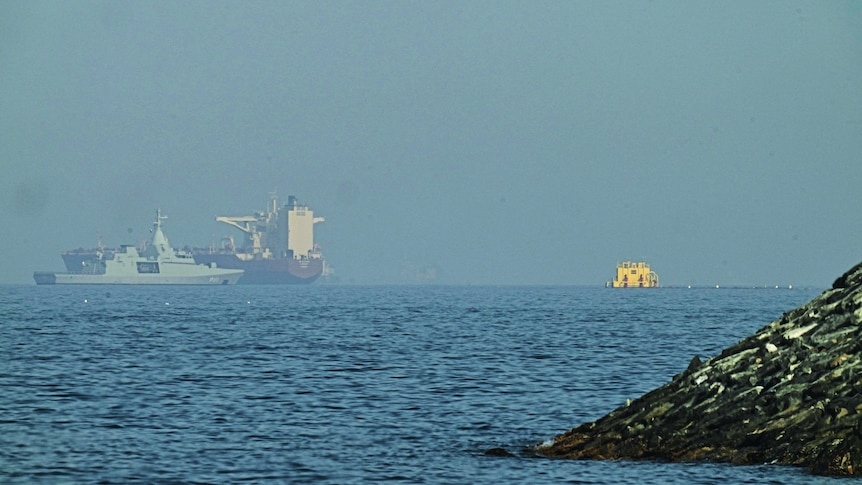
Strait of Hormuz Crisis: Everything You Need to Know About the US-Iran Standoff
A seven-week closure, a brief reopening, a re-closure, ceasefire extensions, and failed talks — the Strait of Hormuz crisis has moved fast. Here is a clear timeline of everything that has happened so far.
Why the Strait of Hormuz Matters
The Strait of Hormuz is the world’s single most important oil chokepoint. Sitting between Iran to the north and Oman and the UAE to the south, roughly 20% of global oil trade passes through this narrow waterway every day. Iran has, for decades, wielded the threat of closure as its most potent geopolitical lever — and in early 2026, it pulled that lever.
After Israel and the United States launched strikes on Iran and its leadership in late February 2026, Tehran retaliated by striking targets across the Gulf and closing the Strait of Hormuz to commercial shipping — triggering a global economic shockwave that sent oil prices surging and supply chains into disarray.
Timeline: How the Crisis Unfolded
🔴 Friday, April 17 — Iran Announces Reopening
After seven weeks of disruption, Iran’s Foreign Minister Abbas Araghchi announced that the Strait was open to all commercial vessels. The announcement immediately triggered a sharp drop in global oil prices, which had spiked as supply struggled to meet demand worldwide.
The reopening was tied directly to a separate ceasefire between Israel and Lebanon — a conflict that had already claimed more than 2,000 lives in Lebanon and 15 Israelis since late February. Araghchi made clear the Strait’s status was contingent on that ceasefire holding.
🔴 Monday, April 20 — Iran Closes the Strait Again
The relief was short-lived. Shortly after Friday’s announcement, Iran closed the Strait again, citing the continuing US Navy counter-blockade as justification. Oil prices, stock futures, and the US dollar — which had all moved sharply on the reopening news — reversed course.
Meanwhile, the US escalated: President Trump posted on Truth Social that the US Navy had bombed and boarded an Iranian-flagged tanker. Islamabad began preparing to host the next round of negotiations, even as it emerged that Iran’s political and military leadership were not aligned on continued engagement with Washington.
🔴 Tuesday, April 21 — Talks Set, Tensions Rise
With the US-Iran ceasefire set to expire on April 22, Trump confirmed the US would not lift its counter-blockade until a deal was fully in place. US Vice President JD Vance was reported to be travelling to Islamabad for the next round of talks, with mediators from Pakistan, Egypt, and Turkey working to bridge the gap between Iran’s divided political and military factions.
China also weighed in: President Xi Jinping, in a call with Saudi Crown Prince Mohammed bin Salman, pushed for the Strait’s reopening — a signal of Beijing’s deep economic stake in the waterway’s status.
🔴 Wednesday, April 22 — Talks Collapse, Ceasefire Extended
The second round of talks in Islamabad failed to materialise — neither side sent delegations. Despite the breakdown, Trump announced he would extend the ceasefire at Pakistan’s request, while maintaining the US Navy’s counter-blockade.
Adding to the uncertainty, Trump referenced unconfirmed reports that Iran’s military had placed some of the country’s political leaders under house arrest — describing Iran’s government as “seriously fractured.”
Washington’s stated strategy: maintain the counter-blockade to overwhelm Iran’s Kharg Island — the origin point for 90% of Iran’s oil exports — and pile economic pressure on the regime. US Treasury Secretary Scott Bessent described the goal as directly targeting “the regime’s primary revenue lifelines.”
What Are the Two Sides Negotiating?
At the heart of the talks is a potential deal: the lifting of crippling US sanctions on Iran in exchange for Tehran handing over its stockpile of enriched uranium. It is a high-stakes transaction — one that would reshape the geopolitical landscape of the Middle East if completed, or deepen the crisis if it collapses.
The complication is Iran’s internal division. Mediators report that Iran’s political leadership and its military are not on the same page on whether to continue negotiations — making it difficult to know who, ultimately, speaks for Tehran.
The Economic Fallout
Seven weeks of Strait disruption has had cascading effects across the global economy:
- 🛢️ Oil prices spiked sharply as supply from Gulf exporters was disrupted
- 🚢 Shipping routes were rerouted around Africa, adding days and cost to global supply chains
- 📉 Stock markets swung on every development — rising on reopening news, falling on re-closure
- 🌍 Emerging markets dependent on affordable energy, including across Africa, faced acute import cost pressure
What Happens Next?
The situation remains fluid. The ceasefire has been extended but the counter-blockade is in place, talks have stalled, and Iran’s internal coherence is openly in question. Several variables will determine how this resolves:
- 🔍 Whether Iran’s political and military factions can align on a negotiating position
- 🔍 Whether the Israel-Lebanon ceasefire holds — given that Iran linked Strait access to it directly
- 🔍 Whether economic pressure on Kharg Island forces Tehran’s hand
- 🔍 Whether mediators from Pakistan, Egypt, and Turkey can get both delegations into the same room
For global trade, energy markets, and the millions of people whose economies depend on affordable oil, the Strait of Hormuz has never felt more fragile — or more consequential.
This is a developing story. Updates will be added as the situation evolves. Source: Original reporting compiled from live updates.



Kenya’s SACCO Bad Loans at 8.39%: Healthier Than Banks But Risks Lurk Within
Kenya's cooperative lenders closed 2024 in a relatively strong credit position —...
 Nexrein DigitalMay 5, 2026

Leave a comment